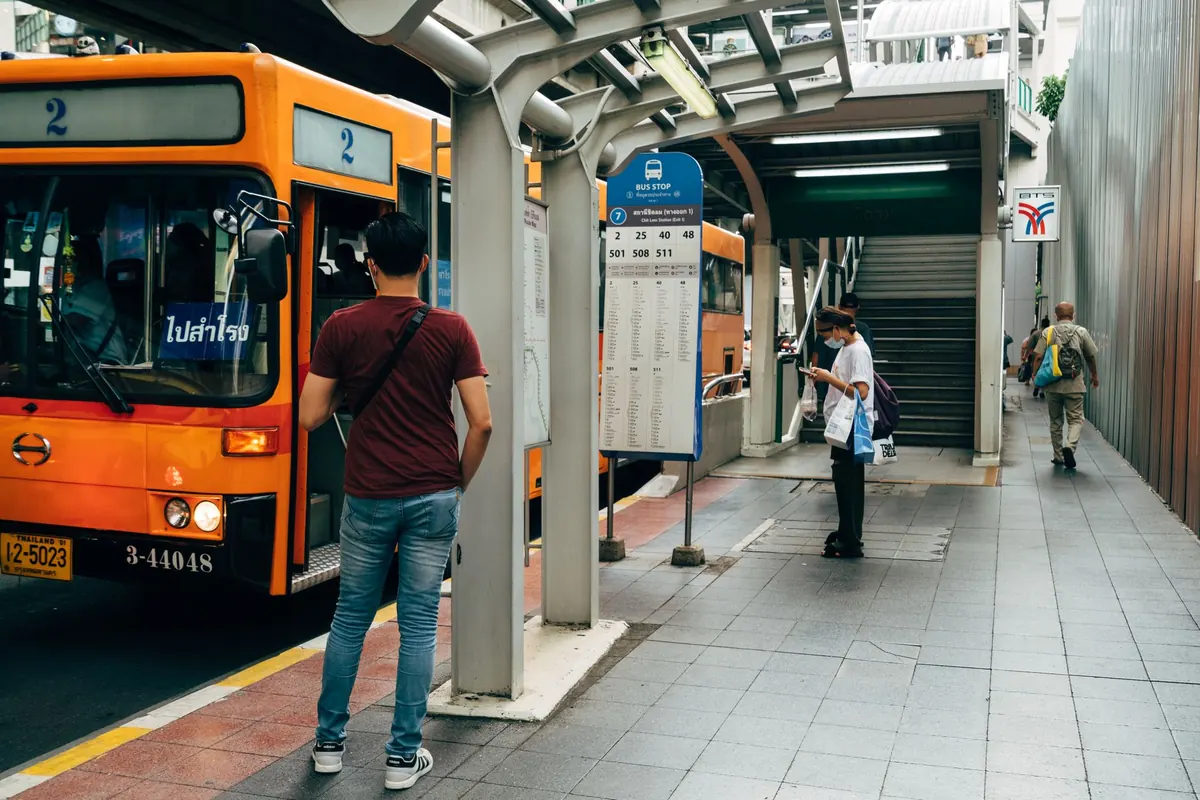
Comparing Ashford's Public Transport Options: Bus, Train, and Cycle Routes Explained
Ashford was built around the car, which is exactly why so many people assume you need one. Look a bit closer and there are three workable options running through the town: a bus network that funnels into the town centre and the station, a rail hub with high-speed links to London and quick hops to the coast, and a web of shared paths that makes short cycling trips genuinely realistic.
None of them wins everything. The trick is matching the mode to the journey instead of picking a favourite and defending it forever.
What each option is actually good at
- Bus — cheapest way to cross town, best in bad weather, useful with shopping bags, weakest on evenings and Sundays.
- Train — fastest by a wide margin for anything outside Ashford, most expensive per trip, almost useless for journeys inside the town.
- Bike — quickest door to door under about three miles, cheapest over a year, hardest in wind and rain and on the busier approach roads.
Read that list against your own week and the answer usually appears on its own. A commute to London looks nothing like a twice-weekly trip to the retail parks.
Buses: the cheapest way to move around town
Stagecoach South East runs most local services in Ashford, with some routes supported by the county council because they would not survive on fares alone. Those supported routes are the ones to check carefully: they often run less frequently, sometimes with a long gap in the middle of the day, and some have no Sunday service at all. A route map tells you where a bus goes; only the timetable tells you whether it fits your life.
On fares, the general rule holds — singles are the worst value. A day ticket usually pays for itself once you make more than a couple of trips, and a weekly or monthly pass is cheaper again if the same journey repeats. If you are eligible for a concessionary travel pass, local bus travel is free off-peak in England, though the exact hours vary, so confirm with the operator rather than assuming.
Where buses genuinely beat everything else is the town centre, Park Mall, County Square, the Designer Outlet and the retail parks. Parking is the reason.
A few habits make bus travel much less frustrating:
- Use the operator's app for live vehicle tracking. It turns a twenty-minute wait into a five-minute one.
- Check which side of the road your stop is on before you leave — Ashford has plenty of paired stops that look identical from a distance.
- Travel between roughly 9.30am and 2.30pm if you can. It is quieter, and it is often when the best value tickets apply.
- Have your payment ready before the bus arrives. Contactless is accepted on most services, but drivers cannot make change for notes.
Trains: unbeatable out of town, irrelevant inside it
Ashford International sits roughly ten to fifteen minutes on foot from the main shopping streets, and that walk is the detail people forget when they plan a car-free commute. Add it to both ends of the trip before you compare the train with driving.
Beyond that, the train wins on time by a wide margin. High-speed services reach London St Pancras in well under an hour, and the classic lines put Canterbury, Folkestone, Dover, Ramsgate, Maidstone and Tonbridge within a short hop. If a journey crosses the town boundary, check the train first.
Where it falls down is everything inside Ashford. For a trip from, say, Kennington to the town centre, the train is not a local tool at all. And the international platforms have not carried a regular Eurostar service for several years, so cross-Channel travel needs checking before you build plans around it.
Getting the most from the railway
- A railcard is worth running the numbers on if you travel even occasionally; season tickets make sense once you are travelling several days a week.
- Bikes: folding models generally travel free at any time, but full-size bikes are restricted at peak times on many services. Read the operator's cycle policy before you commit to a routine.
- Cycle parking at the station is the hidden advantage — check whether the secure storage needs registration in advance.
Cycling: the quiet winner for short trips
Ashford is flatter than its reputation suggests, and the Green Corridor along the Great Stour gives a largely traffic-free spine through the middle of town. Add the shared-use paths built into newer estates such as Repton Park, Park Farm and Chilmington Green, and plenty of everyday trips — school, shop, leisure centre — never touch a main road.
The honest downsides are confidence on the busier approach roads, the big roundabouts, and headwinds on exposed stretches. An e-bike solves more of that than any route improvement will, and it is usually the single change that turns a fair-weather cyclist into a daily one.
Security is the real running cost. Two decent locks, both threaded through the frame and a wheel, a registered frame number, and a habit of parking somewhere overlooked rather than somewhere convenient. Do that and the maths comes out far ahead of any other option.
Cost, speed and convenience, side by side
- Cost: cycling is cheapest over a year once you count the bike, locks and maintenance; the bus is cheapest per journey; the train costs most per trip but saves the most time.
- Speed: train for distance, bike for short hops, bus slowest in traffic but predictable when the timetable is reliable.
- Convenience: bus for rain and shopping, bike for door-to-door, train for reliability and long distances.
Mixing modes is where this gets good
The strongest setup is rarely one mode. It is a combination that covers the gaps in each other.
- Cycle to the station, park or fold, and take the train for the long leg.
- Take the bus into town, walk between errands, and bus home with the shopping.
- Ride the bike for anything under three miles and keep the car keys on the hook.
Bike-and-rail is the combination that surprises most people. A folding bike removes the peak-time restriction entirely, and a short ride at each end often beats a bus connection on time.
A practical starting point
Pick the two journeys you make most often. Check each one on a single weekday and a single weekend day, because the weekend timetable is where most car-free plans quietly fall apart. Then try just one of them without the car — a Saturday is ideal, when a missed bus costs you nothing but twenty minutes.
From there, buy the day ticket, register for the secure cycle parking, or price up the railcard. Fares, timetables and cycle policies change regularly, so confirm current details with the operator before you rely on them. Start with one journey, get it working, and the second one is much easier.
Photo: Markus Winkler / Pexels